

A retirement gift only gets given once, to any one person, for one specific reason and that’s exactly what makes it different from every other corporate gift a company hands out. This guide covers what makes retirement gifts land well, why leather fits the moment in a way routine gifting doesn’t, and how personalization, input, and presentation all play a part in getting it right.
TABLE OF CONTENT
Why Retirement Gifts Deserve a Different Standard Than Routine Corporate Gifting
A generic retirement gift says goodbye; a genuinely personalized one says thank you. That distinction shows up again and again in how retirement gifts are chosen and remembered — the difference isn’t really about price, it’s about whether the gift reflects the specific person and the years they actually gave to the company. Among retirement gifts, this is one of the few corporate gestures given exactly once to any individual, which is precisely why it deserves more thought than a routine annual gift would.
Leather carries a specific advantage in this moment that most other materials don’t. A card case, a personal organizer, or a diary isn’t tied to a desk or a job title — it’s something a retiree can genuinely keep using into whatever comes next, whether that’s a new venture, more time at home, or simply a well-earned rest. This makes leather a natural fit specifically for retirement gifts, in a way it might not be for a more routine, role-bound corporate gesture.
Setting this different standard from the start shapes everything that follows — the personalization, the input gathering, the presentation. A retirement gift chosen with the same generic process as a routine corporate gift tends to feel exactly like what it is: routine, at a moment that deserves anything but.
What Personalization Should Actually Include
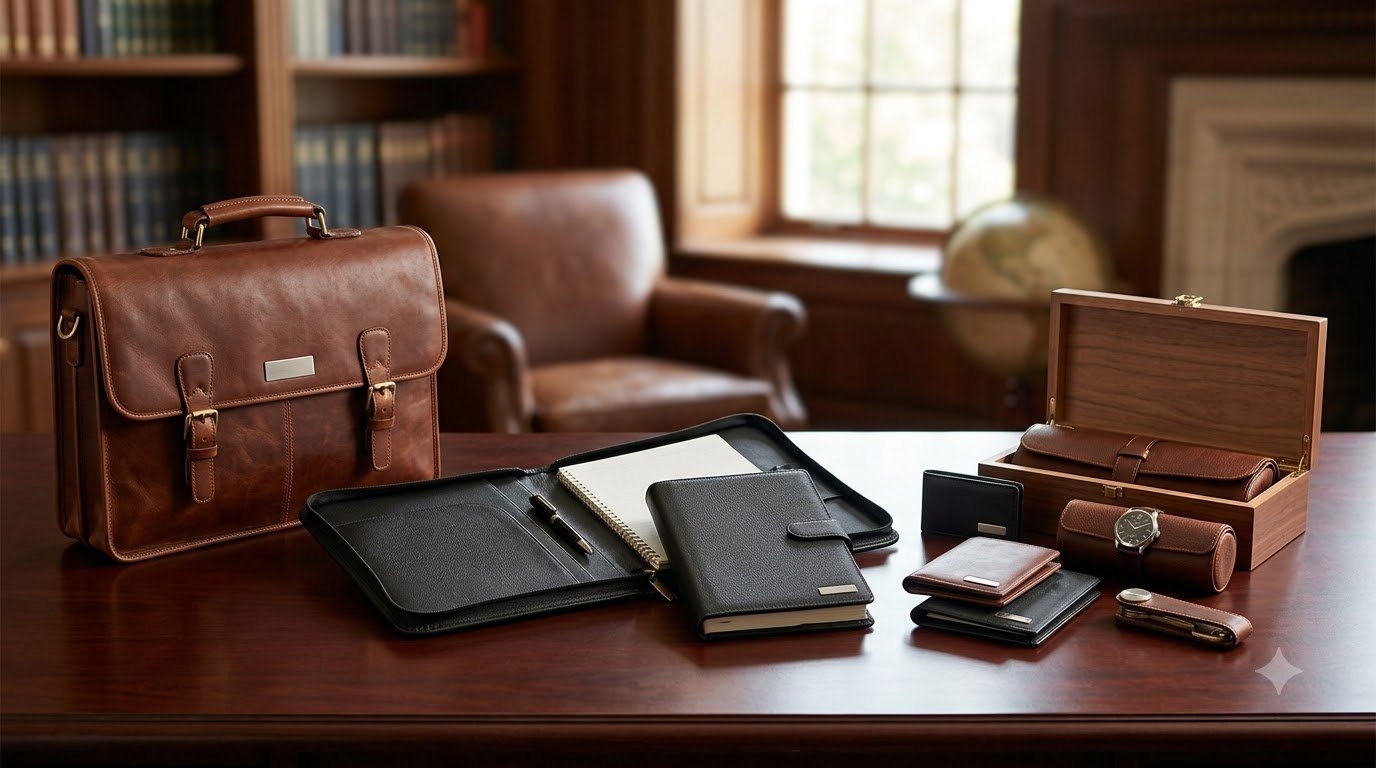
Personalization on a retirement gift means more than adding a name. Including a specific date range — the actual years of service someone gave to the company — turns a nice item into a marker of a genuinely non-repeatable milestone. Among retirement gifts, this single detail is often what separates one that feels personalized from one with a name tag added as an afterthought.
This kind of specificity matters because a retirement gift isn’t marking a generic occasion — it’s marking one particular person’s particular career. A leather diary engraved simply with initials says less than one marked with a full name, a role, and a start and end year, because the second version can only ever belong to one person’s story. That specificity is what makes the gift feel earned rather than assigned.
Getting this right doesn’t require an elaborate design. A clean deboss or foil-stamped detail with a name and years of service, done well, often carries more weight than an elaborate design with no real personal detail behind it. The goal is precision, not decoration.
Getting Input Before Choosing the Gift
Getting personalization right starts with knowing the person, not just their job title. Gathering a bit of input on someone’s interests, preferences, or plans before finalizing the gift is often described as the single most important step in the process — more important, even, than the price point of the item itself. A colleague, manager, or HR contact who knows the retiree well is usually the best source for this kind of detail.
A leather diary or organizer chosen with this kind of input feels considered in a way a stock item, however premium, simply can’t match. Knowing whether someone is retiring into more travel, more time with family, or a second career can shape which item actually makes sense — a travel-friendly card case reads very differently than a desk diary, even though both are leather and both can be personalized.
This step takes a small amount of extra effort, but it’s the difference between a retirement gift that gets used and one that gets set aside politely and never touched again. Among retirement gifts specifically, this effort tends to be remembered as much as the gift itself.
Presentation, Message, and What It Signals to the Team
A retirement gift’s impact depends as much on the moment it’s given in as the object itself. Pairing the gift with a genuine, specific message about the person’s contribution — not a generic thank-you — is what makes the physical item land with real weight. A short farewell moment, a card signed by colleagues, or a specific story shared alongside the gift all add to this effect, turning the handoff into something people remember.
Beyond the individual receiving it, a retirement gift also does quiet work for everyone still watching. Recognizing years of service visibly reinforces a culture that values loyalty — not just to the person retiring, but to current staff who notice how long service gets acknowledged when it’s eventually their turn. In this sense, retirement gifts are one of the more visible signals a company sends about what it actually values, beyond what’s written in any policy document.
Getting the presentation right doesn’t need to be elaborate. A well-chosen leather item, a specific and sincere message, and a moment set aside to deliver both together will do more than an expensive gift handed over without any of that context.
Bringing It All Together
Retirement gifts carry weight that routine corporate gifts don’t, simply because they mark a moment that only happens once. Leather fits this occasion well precisely because it moves forward with the retiree rather than staying behind with the job, and getting the personalization, input, and presentation right is what turns a nice item into one that’s genuinely kept and remembered. Done well, retirement gifts say far more than goodbye — they say the years actually mattered.
If you’re planning a retirement or long-service recognition gift and want help thinking through materials or personalization, get in touch help you get the details right.