

Your logo says a lot about your brand but how it appears on leather says even more. Whether you’re putting together leather corporate gifts, ordering personalised diaries in bulk, or creating a one-of-a-kind notebook for a special client, the branding technique you choose shapes the entire look and feel of the finished product. Foil, emboss, print, transfer each method tells a different story. This guide breaks down every major leather printing technique in plain language, so you can make the right call before you place your order.
TABLE OF CONTENT
- Why the Right Leather Branding Technique Actually Matters
- What Is Leather Branding?
- 1. Foil Blocking — The Classic That Never Gets Old
- 2. Blind Embossing (Debossing) — Subtle, Tactile, and Timeless
- 3. Screen Printing — Bold Colour, Clean Edges
- 4. Full Colour Transfer Printing — When Detail Is Everything
- 5. Decal Printing — Precision for Complex Logos
- 6. Pantone Colour Matching — Getting Your Brand Colour Exactly Right
- Comparison at a Glance
- How to Choose the Right Technique for Your Brand
- The Finish Line — Which Technique Wins?
- FAQs About Leather Branding Techniques
Why the Right Leather Branding Technique Actually Matters
Think about the last time you held a beautifully branded leather notebook. The logo sitting crisply on the cover, the texture under your fingers, the way it just felt premium. That’s not an accident, it’s the result of choosing the right leather branding technique.
Whether you’re ordering leather corporate gifts, customising bulk diaries for an event, or creating something bespoke for a high-end client, the method used to put your logo on leather can make or break the final impression. Too light, and it gets lost. Too harsh, and it looks cheap.
This guide walks you through the most popular leather printing and branding methods, what makes each one unique, and how to decide which one fits your needs without the jargon.
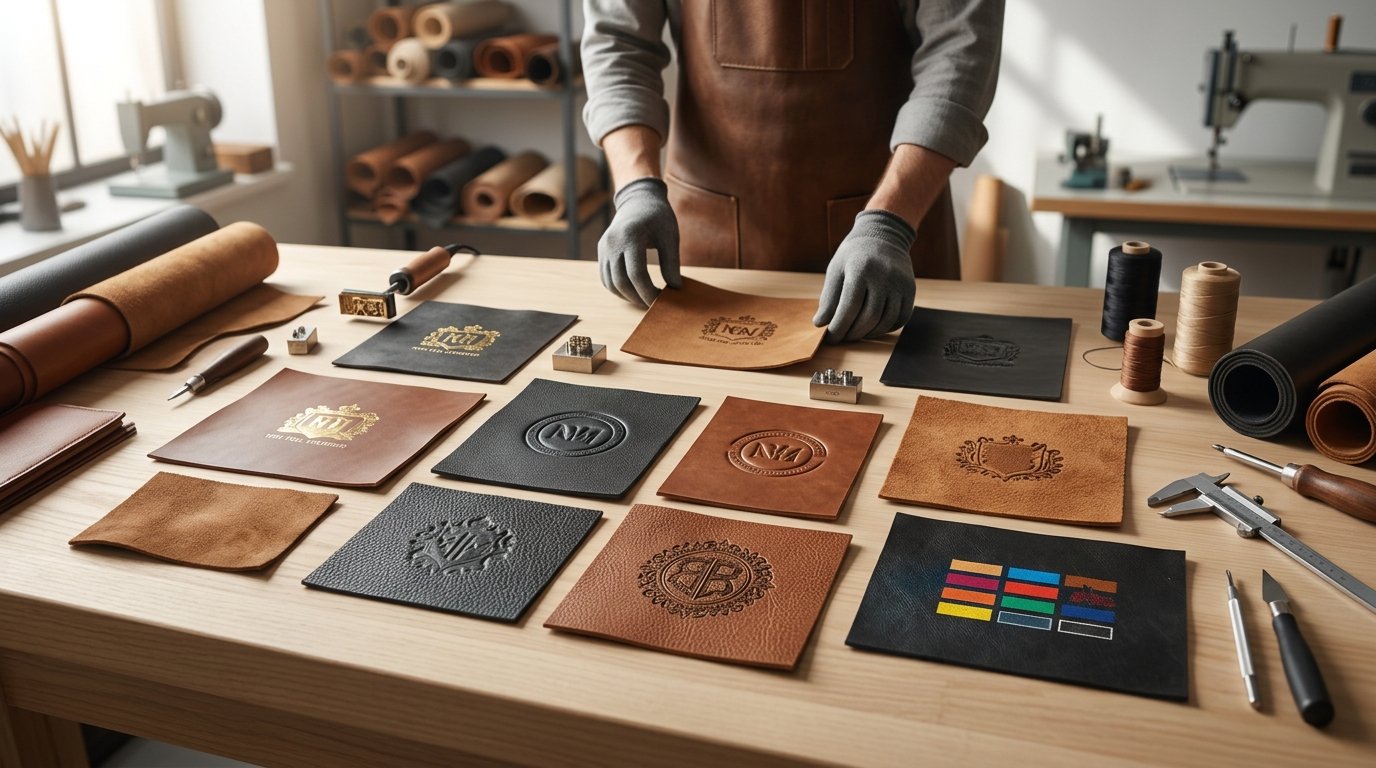
What Is Leather Branding?
Leather branding is the process of applying a logo, name, design, or pattern onto a leather or vegan leather surface. It’s used across notebooks, diaries, wallets, corporate gift sets, and more.
The goal? To make a product feel personal, professional, and memorable.
There are several ways to achieve this, and each method has its own look, feel, cost, and ideal use case. Let’s break them all down.
1. Foil Blocking — The Classic That Never Gets Old
What Is It?
Foil blocking is one of the oldest and most striking forms of leather printing. A metal die is heated and pressed onto a sheet of metallic foil, which then bonds to the leather surface leaving a shiny, mirror-finish impression of your logo or text.
Types of Foil Blocking
- Gold Foil Blocking — Warm, luxurious, and timeless. Perfect for high-end gifts and executive stationery.
- Silver Foil Blocking — Sleek and modern. Works especially well on dark leather.
- Coloured Foil — For brands that want to stay on-brand with specific Pantone shades. Think bold reds, deep blues, or vibrant greens.
Best For
Leather corporate gifts, premium diaries, award gifts, and anything where you want the logo to command attention from across the room.
Things to Keep in Mind
Foil blocking works best with clean, bold logos. Very fine lines or tiny text can be tricky to reproduce accurately to keep the design simple and strong.
2. Blind Embossing (Debossing) — Subtle, Tactile, and Timeless
What Is It?
Blind embossing, sometimes called debossing, presses a design into the leather using a metal die, without any ink or foil. The result is a recessed impression that you can feel as much as see.
It’s quiet. It’s sophisticated. And it never looks dated.
Why People Love It
There’s something deeply satisfying about running your thumb over a debossed logo on leather. It feels handcrafted and deliberate, the kind of quality that doesn’t need to shout.
Best For
Minimalist brands, luxury corporate gifting, monogrammed notebooks, and products where the leather itself is meant to be the star.
One Thing to Note
Because there’s no colour contrast, blind embossing is best viewed in good light. It’s a technique that rewards close attention ideal for gifts that are meant to be held and appreciated, not just glanced at.
3. Screen Printing — Bold Colour, Clean Edges
What Is It?
Screen printing pushes ink through a fine mesh screen directly onto the leather surface. Each colour requires a separate screen, and the result is a flat, vibrant print with sharp, consistent edges.
Where It Shines
If your brand uses strong colours and a graphic-style logo, screen printing on leather delivers results that are hard to beat for visual impact. It’s also cost-effective for larger runs.
Best For
Bold brand logos, promotional leather gifts, team merchandise, and products where colour accuracy matters.
Keep in Mind
Screen printing sits on top of the leather rather than being pressed into it. On textured leather surfaces, very fine details can sometimes bleed slightly clean, graphic designs always work best.
4. Full Colour Transfer Printing — When Detail Is Everything
What Is It?
Full colour transfer printing takes brand printing to another level. A high-resolution image or design is printed onto a transfer film, which is then heat-pressed onto the leather. The result? Photo-quality detail, gradients, and even photographic imagery on a leather surface.
Why It's a Game Changer
This is the go-to technique when a design is too complex for foil or embossing think multi-colour illustrations, intricate patterns, or detailed artwork. It’s printed leather that genuinely surprises people.
Best For
Creative campaigns, bespoke leather corporate gifts with detailed artwork, hospitality gifts, and products where the design itself is the centrepiece
5. Decal Printing — Precision for Complex Logos
What Is It?
Decal printing uses pre-printed adhesive transfers applied directly to the leather surface. It’s highly precise, making it ideal for logos or designs that involve multiple colours and fine detail that other methods might struggle with.
Best For
Complex multi-colour logos, small batch orders, and products where accuracy across many units is critical.
6. Pantone Colour Matching — Getting Your Brand Colour Exactly Right
What Is It?
This isn’t a standalone branding technique, it’s a colour control process used alongside methods like foil blocking and screen printing to ensure your brand colour is reproduced precisely, every single time.
If your brand guidelines specify a particular shade of navy or forest green, Pantone matching ensures the finished leather product matches it exactly not approximately.
Why It Matters
Colour inconsistency across your branded materials is one of those things that quietly undermines brand credibility. Pantone matching eliminates that risk entirely.
Comparison at a Glance
Technique | Finish | Best For | Colour Options |
Gold / Silver Foil Blocking | Shiny, metallic | Premium gifts, executive diaries | Gold, Silver, Coloured |
Blind Embossing | Tactile, tone-on-tone | Luxury, minimalist branding | None (texture only) |
Screen Printing | Flat, vibrant | Bold logos, promotional gifts | Multi-colour |
Full Colour Transfer | Photo-quality | Complex artwork, detailed designs | Full colour |
Decal Printing | Precise, clean | Multi-colour logos, fine detail | Multi-colour |
Pantone Matching | Exact colour | Colour-sensitive brand guidelines | Any Pantone shade |
How to Choose the Right Technique for Your Brand
Not sure where to start? Ask yourself these three questions:
- What’s the mood of your brand? Luxury and understated? Go with blind embossing or gold foil. Bold and modern? Screen printing or full colour transfer will serve you better.
- How complex is your logo? Simple text or clean icons → foil blocking or embossing. Detailed multi-colour artwork → full colour transfer or decal printing.
- What’s the occasion? Leather corporate gifts for executives call for a different feel than promotional notebooks for a trade show. Let the context guide the technique.
The Finish Line — Which Technique Wins?
Foil blocking is unbeatable for luxury impact. Blind embossing wins on tactile elegance. Screen printing delivers when colour and boldness matter. Full colour transfer takes the crown for intricate, artistic designs.
The best leather branding isn’t always the flashiest, it’s the one that aligns with your brand’s personality, the quality of the product, and the message you want to send when someone picks it up for the first time.
If you’re looking to explore these techniques across premium notebooks, diaries, and leather corporate gifts from foil-blocked executive covers to fully personalised bespoke collections — you can browse the full range of customisation options and find the combination that works for your brand.