

A hotel guest doesn’t carry a coaster home the way a client might keep a branded notebook. They touch it, use it, and put it back down — over and over, across an entire stay. That’s what makes hospitality gifts a different category altogether. This guide covers why hospitality gifting works differently, which items matter most, and how to choose materials and branding that survive daily handling.
TABLE OF CONTENT
Why Hospitality Gifting Works Differently from Standard Corporate Gifting
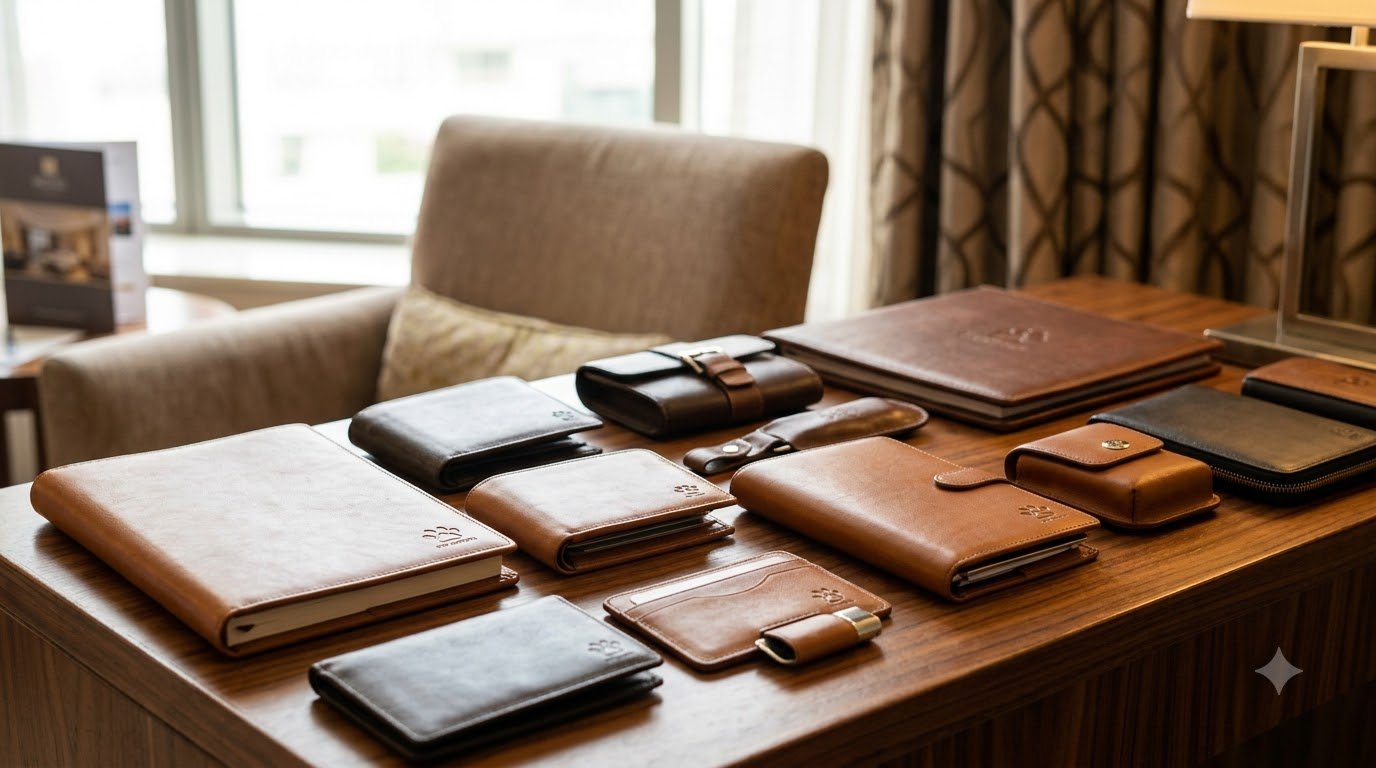
Most corporate gifting is built around a single handoff — a diary given once, a pen carried away after one meeting. Hospitality gifts work differently because guests interact with the items directly and repeatedly, during a single visit. A coaster, a menu holder, a bill wallet — each gets picked up, handled, and noticed multiple times over the course of one meal or one stay, rather than once and then forgotten.
This repeated contact is exactly why small tabletop and in-room touches matter more than they might seem to at first glance. Hotels that invest in consistent, well-made guest-facing details are associated with better reviews and higher repeat bookings in industry reporting. It’s rarely one dramatic gesture that drives this — it’s the accumulation of small, considered touches across the entire guest experience.
This distinction should shape how a hospitality brand thinks about gifting altogether. Rather than asking “what will guests take home,” the better question for hospitality gifts is “what will guests touch and notice while they’re here” — because that’s where the real branding opportunity in this category actually lives.
The High-Contact Items Worth Getting Right
A handful of specific items carry outsized weight in hospitality gifting. A bill or check presenter is handled at the end of nearly every table’s visit, making it a high-frequency touchpoint that’s easy to overlook simply because it’s so routine. A menu holder does even more work, staying in a guest’s hands for the length of an entire meal — which makes it one of the longest sustained points of contact a restaurant has with any single guest.
Coasters round out the tabletop set, sitting in direct view throughout a drink or dining service. They’re a small item, but their visibility during the meal makes them punch above their size in terms of guest attention. Getting these three items right — bill wallet, menu holder, and coaster — covers the core of what a restaurant-facing hospitality gifting program actually needs.
Hotels have their own set of high-contact items that don’t really exist in any other gifting category. A door hanger is seen by both housekeeping and guests multiple times during a single stay, making it one of the most-viewed branded items a property has, despite rarely being thought of as “gifting” at all. Key fobs and card holders add a mobile touchpoint on top of that, traveling with the guest from check-in to check-out and back again each day of their stay.
Material and Branding Choices That Hold Up to Daily Handling
Material choice matters more in hospitality gifting than in typical one-time corporate gifting, because these items don’t get carried away — they stay on property and get reused guest after guest. Leather and vegan leather are consistently recommended for hospitality accessories because they read as premium and hold up to heavy daily handling in a way paper or plastic simply can’t. A coaster or menu holder that looks worn after a few weeks undercuts the exact impression a hospitality brand is trying to create.
Branding technique needs to match this same durability requirement. Foil stamping and debossing are the most commonly recommended methods for hospitality leather accessories, since they hold up to frequent handling far better than a printed logo, which tends to fade or wear with repeated contact. This is an easy detail to overlook when comparing suppliers, but it directly affects how long a branded item keeps looking sharp on property.
Choosing well here isn’t just about appearance — it’s about total cost over time. An item that needs replacing every few months because the branding wore off costs more in the long run than one built to last through months of continuous guest handling, even if the upfront price looks higher.
Building a Consistent Set — Especially Across Multiple Properties
Consistency across the full set of guest-facing items matters as much as the quality of any single piece. Ordering coasters, menu holders, and bill wallets together, in the same material, color, and finish, creates a seamless sense of quality that guests notice even without being able to name exactly why. A mismatched set — one item in leather, another in a different vegan leather shade — quietly undercuts the polish a hospitality brand is working to build.
This becomes even more important for hospitality brands operating multiple properties or locations. Standardizing accessory sourcing across every location keeps the guest experience unified, rather than letting each property develop its own slightly different look through piecemeal ordering. A guest who visits two locations of the same hotel group should feel the same consistent quality in both.
Getting this right takes planning upfront, but it pays off in a guest experience that feels considered and cohesive, property to property, rather than assembled item by item over time.
Bringing It All Together
Hospitality gifts do their best work in the moments they’re actually touched — the menu a guest holds, the coaster under their glass, the door hanger they check each morning. Getting these high-contact items right, in materials and branding built to survive daily handling, and keeping the full set consistent across every property, is what turns hospitality gifting from an afterthought into a real part of the guest experience.
If you’re building out a hospitality gifting program for your hotel or restaurant and want to talk through materials, branding, or consistency across multiple locations, get in touch to help you put it together.