

In today’s business world, corporate gifting has changed from just being a small token of thanks to becoming a strong way to show values. More and more companies are choosing sustainable gifts and eco-friendly options that support environmental responsibility, while still keeping the high-quality and luxurious feel of traditional corporate gifts. At the center of this change is the selection of materials that have less impact on the environment without lowering the quality or look of the gifts.Whether it’s personalized notebooks, stylish diaries, leather corporate gifts or high-end accessories, there’s a growing need for products that are good for the planet.
While traditional leather gifts have always stood for luxury and lasting quality, new modern options now let brands offer the same level of premium appeal using materials that are renewable, recycled, or made with innovative techniques. These choices not only cut down on carbon footprints but also help build a better brand image, create stronger connections with customers, and motivate employees. This guide looks at the best eco-friendly materials that are changing leather gifts into real sustainable choices, helping businesses make a lasting and meaningful impression.
TABLE OF CONTENT
- Natural and Renewable Plant-Based Materials
- Recycled and Upcycled Materials
- Biodegradable and Compostable Materials
- Other Sustainable and Innovative Materials
- Comparison of Eco-Friendly Materials
- Best Practices for Choosing and Using These Materials in Corporate Gifts
- Real-World Examples and Case Studies
- Challenges and Future Outlook
- Conclusion and Actionable Tips
- Frequently Asked Questions (FAQs)
Natural and Renewable Plant-Based Materials
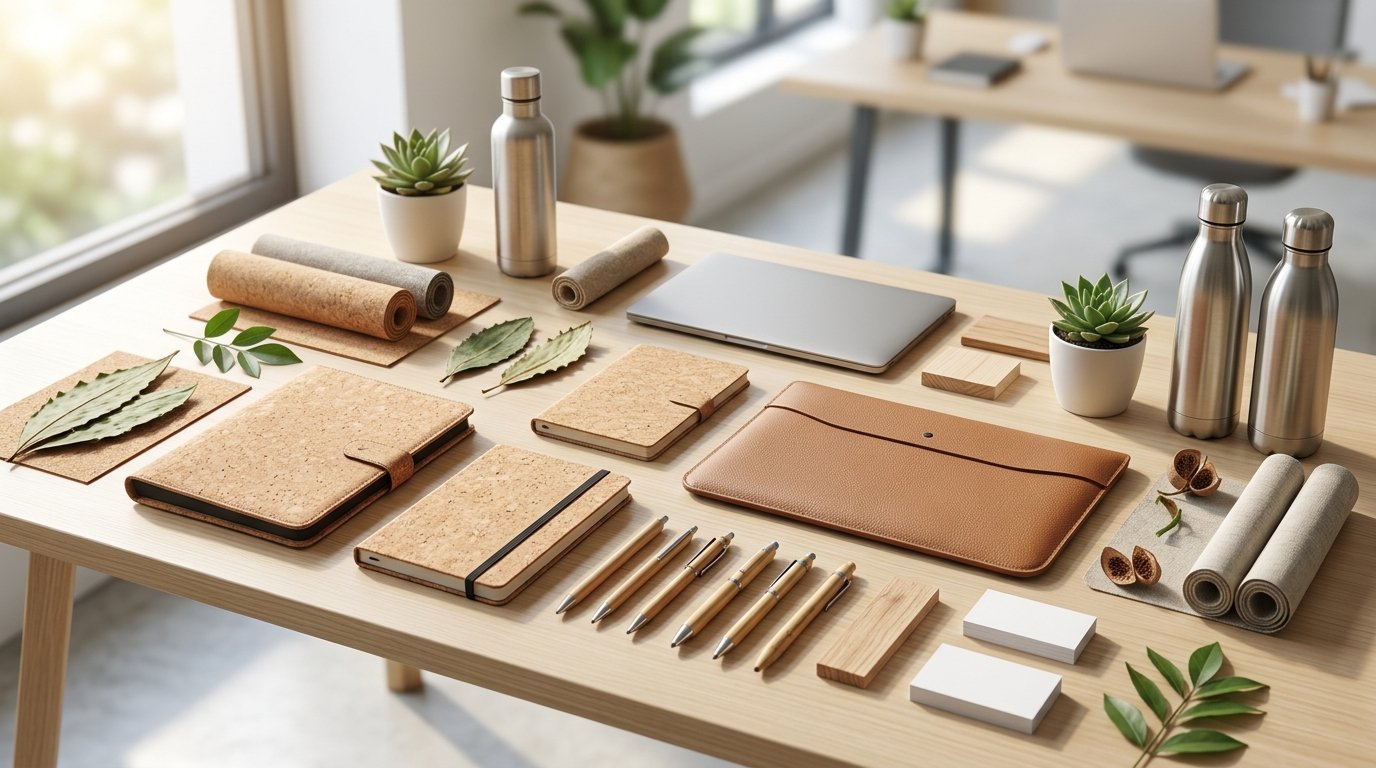
Plant-based materials are great because they can be renewed easily and have a smaller effect on the environment, making them perfect for eco-friendly corporate gifts. Bamboo is one of the quickest-growing plants and doesn’t need any pesticides. It regrows very fast, which makes it ideal for notebook covers, pens, and desk organizers. Plus, it has natural antibacterial qualities, which makes everyday office items more useful.
Cork comes from the bark of cork oak trees and is taken without hurting the tree, so it’s a great choice for lightweight and water-resistant options like journal covers and wallets.
Pineapple leaves are usually waste from farming, but they can be turned into Piñatex, a soft and strong vegan leather alternative. It’s a great way to give leather corporate gifts a fresh, tropical feel. Apple peels and cores can be made into apple leather, turning byproducts from juice production into flexible covers for diaries. Cactus leather comes from mature prickly pear plants and needs very little water and no pesticides. It gives a tough, breathable texture that’s similar to traditional leather.
All these materials work well for high-end corporate gifts like custom notebooks.
The plant-based covers look great with recycled paper that’s certified by FSC. They show that eco-friendly gifts can be just as stylish and high quality as traditional ones, while also helping support sustainable farming practices.
Recycled and Upcycled Materials
Recycled and upcycled materials give old waste a fresh start, becoming key parts of eco-friendly products in a circular economy. Recycled paper, often from used materials, is turned into high-quality notebook pages that feel smooth and help reduce the need to cut down trees. rPET, which comes from recycled plastic bottles, is made into strong tote bags or protective sleeves, helping to cut down on ocean pollution while still looking sleek and professional.
Upcycled fabrics and ocean-bound plastics are used in things like accessory linings or notebook bindings, turning waste that might end up in landfills into useful and desirable sustainable gifts.
For those who like the classic look of leather, upcycled leather scraps from tanneries can be made into high-quality covers, using fewer new resources. Organic cotton, taken from old textile waste, adds softness to gift packaging or other items like branded pouches.
These choices help lower the environmental impact of production and share a story of creativity and sustainability.
When someone receives a leather corporate gift made from recycled materials, they feel like they’re joining a bigger effort to protect the environment.
Biodegradable and Compostable Materials
Biodegradable and compostable materials allow eco-friendly business gifts to return to the earth without causing harm after they’re no longer in use. Seed paper with wildflower or herb seeds can be used in notebook covers or notecards, turning them into plantable memorabilia that grow into beautiful flowers, bringing joy to environmentally aware recipients. Pens and protective cases made from cornstarch-based PLA (polylactic acid) are biodegradable and will break down in industrial composting plants.
Wheat straw composites, which come from grain harvesting, are used to make strong yet lightweight diary spines or organizers that naturally decompose.
Mushroom mycelium is used for packaging or fillers that protect luxury corporate gifts during shipping. These materials are fully compostable and don’t contain microplastics. For vegan leather gifts, some innovative biodegradable options use plant starches mixed with natural binders, so even the cover can safely return to the soil without any harm.
These materials are especially popular for short-term promotional items or event giveaways, where the environmental impact at the end of the product’s life is as important as the initial luxury experience.
This supports the idea of giving gifts that are both special and sustainable.
Other Sustainable and Innovative Materials
Beyond the basics, advanced innovations open up new possibilities for eco-friendly products. Mycelium leather, made from mushroom roots grown in controlled environments, provides a completely biodegradable, plastic-free vegan leather alternative that is regenerative and uses minimal resources. It’s ideal for high-end notebook covers that age beautifully, much like traditional leather. Algae-based foams and bio-resins offer flexible, lightweight options suitable for diary accents or packaging.
FSC-certified woods and hemp fibers provide strength and natural texture for structural elements in leather corporate gifts.
Lab-grown or cell-cultured leather looks like animal hides but without the ethical or environmental issues, making it a future-proof choice for luxury corporate gifts. These materials push the boundaries, allowing brands to create forward-thinking vegan leather gifts that feel luxurious yet support planetary health.
Comparison of Eco-Friendly Materials
Picking the best material means considering things like how long it will last, how much it costs, and how good it is for the environment. Here’s a straightforward comparison that’s specifically for leather corporate gifts and other high-quality products.
Material | Durability | Cost Level | Eco-Impact (Lower is Better) | Best For Leather Corporate Gifts | Biodegradability |
Bamboo | High | Medium | Very Low | Covers, pens | Yes |
Piñatex (Pineapple) | Medium-High | Medium-High | Low | Vegan leather covers | Partial |
Apple Leather | Medium | Medium | Low | Soft diary bindings | Partial |
Cactus Leather | High | Medium-High | Very Low | Premium vegan notebooks | Partial |
Recycled Paper/rPET | Medium | Low | Low | Interiors, bags | Yes |
Mycelium Leather | High | High | Very Low | Luxury vegan leather gifts | Yes |
Vegetable-Tanned Leather | Very High | High | Low (if ethical) | Classic leather corporate gifts | Yes |
Plant-based alternatives such as cactus and mycelium are great for sustainability and appeal to vegans, while recycled materials offer a more affordable option. Vegetable-tanned leather remains the best choice for durability, making it ideal for those who prefer real leather corporate gifts.
Best Practices for Choosing and Using These Materials in Corporate Gifts
When choosing materials for leather corporate gifts, look for certifications like GOTS, OEKO-TEX, or FSC to confirm they meet eco-friendly standards. Try to source materials locally whenever possible to reduce the carbon footprint from transportation. Adding a personal touch through customization can boost the perceived value of the gift—consider embossing your logo on cork or Piñatex covers to give it a luxurious feel. Think about how different materials can work together: pairing a bamboo notebook with recycled paper inserts creates a cohesive and stylish look. Make sure the gifts are durable so they can be used every day, which helps keep your brand visible. Share the story behind each sustainable gift using QR codes or impact cards to make them more engaging and start conversations. Lastly, check that your suppliers follow ethical labor practices to ensure your gift truly reflects your values.
Real-World Examples and Case Studies
Some top companies have started using these eco-friendly materials and are seeing great results. A big tech company gave employees notebooks made from recycled paper with cork covers, which helped cut down on event waste by 40% and also made employees happier. Fashion brands working with Piñatex have given out vegan leather gifts to customers as thank-you presents, and this has received praise from the media for being innovative.
An eco-friendly clothing company switched to using wallets made from cactus leather as gifts for their business partners.
This move not only improved their relationships with clients but also helped them stay aligned with their ESG goals. Inspired by Allbirds, some companies have created promotional bundles that include eucalyptus and recycled materials, showing that eco-friendly products can be just as appealing as luxury items.
These examples highlight how using sustainable corporate gifts can bring real business benefits. Branded diaries and notebooks, in particular, play a powerful role in strengthening customer relationships and boosting brand visibility, leading to actual environmental improvements as well.
Challenges and Future Outlook
Despite the advantages, there are still some challenges. The initial cost for higher quality options like mycelium or cactus leather can be a problem for budgets, and the supply of these new vegan leather products is not yet very big. To keep the feel and look of traditional leather corporate gifts, it’s important to choose the right materials so that the quality isn’t affected.
Looking forward, there are promising developments in bio-fabrication and expanding plant-based production, which could lead to more affordable and better-performing options.
By 2030, it’s expected that fully plastic-free materials like mycelium and algae will be widely used, making eco-friendly business gifts the standard instead of something special. Companies that start investing now are likely to be at the forefront of sustainability efforts.
Conclusion and Actionable Tips
The growing use of eco-friendly materials in corporate gifting is more than just a passing trend; it’s a smart strategy for creating responsible luxury. Materials like Piñatex and cactus leather, along with recycled options and new mycelium-based alternatives, let brands offer sustainable gifts that are both luxurious and eco-conscious. These choices help create impressive vegan leather gifts and standout corporate gifts that make a real impact.
Actionable tips: Review your current gifting program to see where you can incorporate these materials.
Start with small pilot batches, like notebooks or diaries, and keep track of how recipients respond. Focus on making the gifts durable and telling a compelling story to increase their effect. For ideas on how to turn these materials into beautiful leather-like corporate gifts, check out premium sustainable options here.
By choosing these materials now, your business helps reduce its environmental impact and sets an example for a more sustainable future one thoughtful gift at a time.
Frequently Asked Questions (FAQs)
1. What makes a corporate gift truly eco-friendly?
2. Are vegan leather gifts a good alternative to traditional leather corporate gifts?
3. How long do products made from eco-friendly materials last?
4. Can I get sustainable corporate gifts customized with my company logo?
5. Are green business gifts more expensive than regular ones?
6. Which eco-friendly material is best for notebooks and diaries?
7. How can I make sure the eco-friendly products I buy are genuine?
8. Do sustainable corporate gifts really help the environment?
These FAQs should help you choose the right leather corporate gifts that match your sustainability goals and high standards.